
Custom Retaining Wall Installation in Rosemead, CA
Rosemead Paver Pros designs and builds retaining walls for homeowners throughout Rosemead and the surrounding San Gabriel Valley. Every wall is engineered to manage sloped terrain and prevent erosion for years to come.
20+
YEARS OF EXPERIENCE
450+
PROJECTS COMPLETED
4.9/5
AVERAGE CUSTOMER RATING
4hr
AVERAGE REPONSE TIME
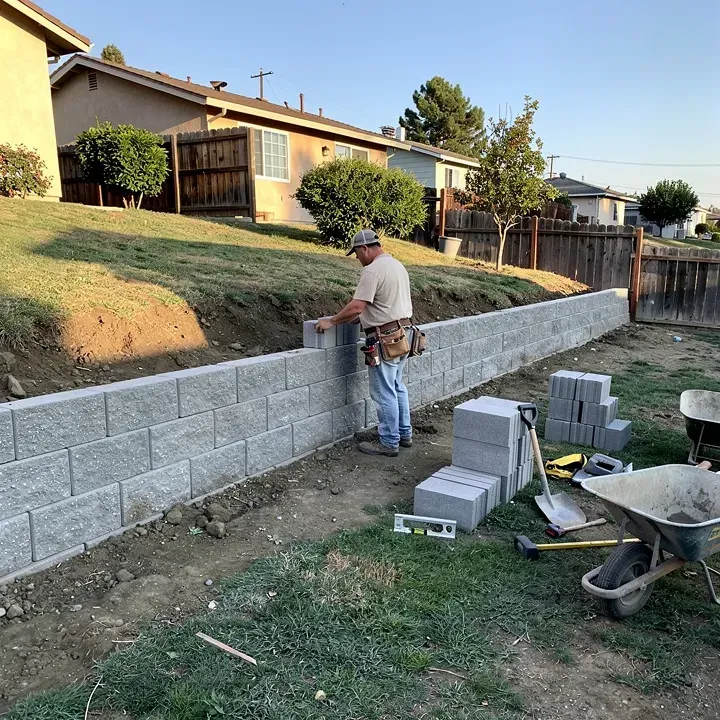
Everything to Know Before Building a Retaining Wall
A retaining wall is a structural feature built to hold back soil on a sloped property, preventing erosion and creating usable, level space in an area that would otherwise be difficult to landscape or enjoy. Unlike a simple decorative wall, a properly built retaining wall must account for the ongoing pressure of soil and water behind it, which means the engineering and drainage work happening behind the visible blocks matters just as much as the finished appearance in front.
Homeowners typically consider a retaining wall when they have a sloped backyard that limits how the space can be used, when soil erosion is gradually eating away at their landscaping or property line, or when an existing wall has begun to lean, bulge, or crack and needs to be rebuilt correctly. Once completed, a retaining wall offers benefits like newly usable, level yard space, protection against soil erosion and water damage to nearby structures, and a finished look that adds visual structure and value to an otherwise unmanaged slope.
When Homeowners Should Consider a Retaining Wall
Homeowners with a sloped or uneven backyard that limits usable space are the most common candidates for a new retaining wall, particularly when erosion has already started to wash away topsoil or landscaping during Southern California's rainy winter months. It's equally important for homeowners with an existing retaining wall that's showing signs of failure, such as leaning, bulging, or visible separation between blocks, since these issues typically get worse the longer they're left unaddressed. The best time to act is before the rainy season begins, since soil saturation during winter months puts the most stress on wall structures and can accelerate an existing problem.
Ignoring a failing or absent retaining wall carries real risk. Continued soil erosion can undermine nearby structures like patios, walkways, or even a home's foundation over time, while a retaining wall that's already showing signs of failure can eventually collapse, creating a safety hazard and a far more expensive repair than addressing the issue early. A sloped yard left unmanaged also represents wasted usable space that could otherwise become a functional part of the property.
How We Build Your Retaining Wall, Step by Step
Every retaining wall project begins with an on-site consultation where we assess the slope, soil conditions, and drainage patterns of the property before recommending the appropriate wall height, material, and design. For taller walls, this stage may also involve additional engineering review to ensure the structure is built to properly manage the pressure behind it.
From there, we excavate a level trench for the base course and install a compacted gravel foundation, since a wall is only as strong as what's beneath the first row of blocks. Wall blocks are then stacked in courses, with each layer checked for level and properly backfilled with drainage gravel and, where needed, geogrid reinforcement to anchor the wall against the soil behind it. This drainage layer is critical, since trapped water pressure is one of the leading causes of retaining wall failure.
Once the wall reaches its full height, we complete final backfilling, grade the soil behind the wall appropriately, and finish with any capping blocks for a clean, polished top edge. A full site cleanup completes the project, leaving a structurally sound wall ready to hold back soil for decades to come.
What Affects the Cost of a Retaining Wall
The cost of a retaining wall is primarily driven by its total length and height, since taller walls require significantly more engineering, reinforcement, and material than a low decorative wall. Walls that exceed certain height thresholds often require permits and structural engineering review, which adds both time and cost to the project but is essential for ensuring the wall performs safely over the long term.
Soil conditions and drainage requirements also play a major role in pricing. Properties with poor natural drainage or particularly saturated soil may require additional gravel backfill, drain pipe installation, or geogrid reinforcement to keep the wall stable, all of which add to the overall investment. Site accessibility matters as well, since walls in hard to reach backyard areas may require materials to be moved manually rather than by equipment, increasing labor time.
Finally, the wall block material selected affects cost, with options ranging from standard concrete retaining wall block to premium natural stone or textured finishes that offer a more upscale appearance. We provide a detailed, itemized estimate during your free on-site consultation, including whether engineering or permitting will be required for your specific project, so there are no surprises once work begins.
Frequently Asked Questions
Can a retaining wall be combined with other features like seating or planters?
Yes, retaining walls are often designed with additional functionality in mind, such as built in seating along the top course or integrated planter areas for landscaping. We'll discuss these options during your consultation if you're interested in getting more use out of your wall beyond its structural purpose.
How long does it take to build a retaining wall?
Most residential retaining wall projects take between three and seven days depending on the length, height, and whether engineering or permitting is required beforehand. Taller walls requiring permits will have a longer timeline overall due to the approval process, which we factor into your project schedule from the start.
How do you keep a retaining wall from failing over time?
The key to a long lasting retaining wall is proper drainage behind the structure, since trapped water pressure is the leading cause of wall failure. We install a compacted gravel base, drainage gravel backfill, and geogrid reinforcement where needed to ensure water moves through the wall system rather than building up pressure against it.
Do I need a permit to build a retaining wall in Rosemead?
In most cases, retaining walls under four feet in height do not require a permit, but taller walls typically do fall under the City of Rosemead's permitting requirements and may require structural engineering review. We handle the entire permitting process on your behalf whenever it's needed, including any required engineering drawings and inspections.
Ready to Upgrade Your Outdoor Space?
Your backyard has more potential than it's currently living up to. Whether that means a new paver patio, a driveway that finally matches the rest of your home, or a cozy fire pit for cool evenings with family, Rosemead Paver Pros is ready to bring it to life. Reach out today for a free, no obligation estimate and see why homeowners throughout Rosemead and the San Gabriel Valley trust us with their hardscape projects.


Contact
(626) 548-4496
Mon–Sun: 7am–6pm
Rosemead, CA
About Us
Rosemead Paver Pros is a locally owned and operated hardscape contractor serving homeowners throughout Rosemead and the greater San Gabriel Valley. With years of hands on experience, our team is committed to delivering durable, quality craftsmanship backed by honest communication and a genuine care for every property we work on. From the first estimate to the final walkthrough, we treat each project like it's our own home.
© Copyright 2026 Rosemead Paver Pros. All rights reserved.
© Copyright 2026 Rosemead Paver Pros.
All rights reserved.